Evaluating the Broken Home Script Font for Your Next Design Project
In the vast and ever-expanding universe of typography, selecting the right font is a foundational decision that influences the tone, readability, and overall effectiveness of any design. For projects that require a personal, elegant, or celebratory touch, script fonts are often the go-to choice. Among the many options available, Broken Home has established itself as a popular and versatile contender. This article provides a balanced evaluation of the Broken Home font, exploring its characteristics, ideal use cases, and the practical considerations you should weigh before integrating it into your work.
Understanding the Core Identity of Broken Home
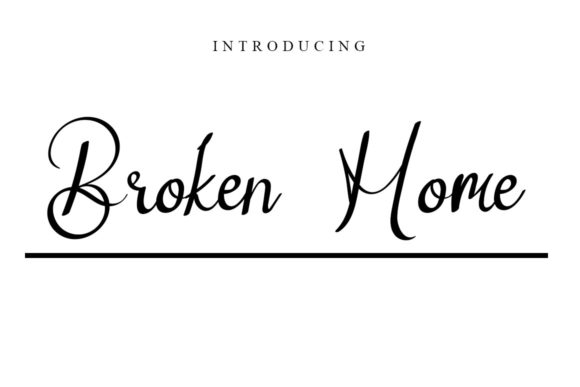
At its heart, Broken Home is a modern script font that masterfully blends the organic flow of hand-lettering with a clean, legible digital structure. It is not merely a collection of letters but a carefully crafted tool designed to evoke specific emotions. The font is characterized by its flowing, connected letterforms and a natural baseline that mimics the subtle irregularities of authentic handwriting. This gives it a sense of warmth and personality that more rigid, geometric fonts often lack.
Its aesthetic is best described as fresh, clean, and elegant. While many script fonts can veer into overly ornate or difficult-to-read territory, Broken Home maintains a high degree of clarity. The designer has paid close attention to the spacing and connections between characters, ensuring that words form a cohesive and visually pleasing whole. This balance between stylistic flair and functional legibility is a key reason for its widespread appeal.
Evaluating the Benefits: Where Broken Home Excels
When considering a font for a project, it's crucial to understand its strengths. The benefits of using Broken Home are numerous and can be broken down into several key areas.
Aesthetic Appeal and Emotional Tone
The primary advantage of Broken Home is its ability to instantly add a joyful and sophisticated touch to a design. Its elegant curves and sweet character lend themselves perfectly to projects that aim to convey celebration, romance, or personal care. Think of wedding invitations, greeting cards, or branding for boutique businesses. In these contexts, the font does more than just present information; it helps tell a story and sets a specific, positive emotional tone.
Readability and Legibility
A common pitfall of script fonts is sacrificing readability for style. Broken Home navigates this challenge effectively. While it is not intended for long blocks of body text, it remains highly legible in its intended applications, such as headings, logos, and short, impactful phrases. The clear distinction between characters prevents the text from becoming an indecipherable swirl, which is a critical consideration for any professional design.
Versatility Across Project Types
Despite its strong personality, Broken Home is surprisingly versatile. Its clean lines allow it to function well in both formal and informal settings. For a formal event like a gala or a high-end product label, it provides a touch of class. For a more casual project, such as a blog header or social media graphic, it feels approachable and friendly. This adaptability makes it a valuable asset in a designer's toolkit, capable of serving a wide range of client needs.
Practical Considerations and Potential Tradeoffs
No font is a universal solution. A thorough evaluation requires an honest look at the potential drawbacks and limitations of using Broken Home.
Context is King: Avoiding Misapplication
The very characteristics that make Broken Home beautiful can become liabilities if used in the wrong context. Its decorative nature makes it unsuitable for technical documents, academic papers, or user interfaces where absolute clarity and a neutral tone are paramount. Using it for body text on a website would lead to significant eye strain for readers. It is essential to recognize that this is a display font, designed for impact and personality, not for conveying dense information.
Licensing and Commercial Use
A critical, often overlooked consideration is the font's license. Many beautiful fonts available online are free for personal use only. If you intend to use Broken Home for a commercial project—such as a client's logo, a product for sale, or marketing materials—you must verify the licensing terms. Using a font without the proper commercial license can lead to legal complications and financial penalties. Always source your fonts from reputable foundries and understand the rights you are purchasing.
Overuse and Design Fatigue
Like any popular design trend, a font can suffer from overuse. Because Broken Home is widely available and beloved, it can sometimes feel ubiquitous. In a competitive landscape where standing out is key, relying too heavily on a popular script font might inadvertently make a design feel generic. The key is to use it thoughtfully, perhaps pairing it with a strong sans-serif or serif font to create a more unique typographic hierarchy.
Decision-Making Framework: Is Broken Home the Right Choice?
To determine if Broken Home aligns with your project's goals, consider the following questions.
- What is the primary message? If your project aims to communicate elegance, celebration, or a personal touch, Broken Home is a strong candidate. If the message is corporate, technical, or highly formal, it is likely not the best fit.
- Who is your audience? The font's sweet and joyful character will resonate well with audiences for weddings, baby products, fashion boutiques, and artisanal goods. It may be less effective for audiences expecting a more serious or institutional tone.
- How will it be used? Plan to use Broken Home for headlines, logos, or short call-to-action phrases. Avoid it for paragraphs of text, detailed instructions, or any application where readability at small sizes or on low-resolution screens is critical.
- Have you considered the pairing? A script font rarely works well in isolation. Think about what other typeface you will pair it with. A clean, geometric sans-serif like Montserrat or Lato can provide a beautiful and functional contrast, grounding the design and improving overall readability.
Situations for Strong Fit vs. Considering Alternatives
Broken Home is a strong fit for:
- Wedding and event invitations
- Logo design for boutiques, bakeries, or creative studios
- Product packaging for cosmetics, gourmet foods, or handcrafted items
- Social media graphics and blog post titles
- Personal stationery and thank-you cards
You may want to consider alternatives when:
- Maximum legibility is non-negotiable: For signage, mobile app interfaces, or instructions, a clear sans-serif or a simple serif font would be more appropriate.
- The project requires a different aesthetic: If the goal is to convey a sense of tradition and authority, a classic serif font like Garamond might be better. For a modern, minimalist look, a font like Helvetica or Futura would be more suitable.
- You need a more unique look: If you are concerned about your design blending in with others, explore less common script fonts or consider commissioning custom lettering to achieve a truly one-of-a-kind result.
Final Thoughts on Integrating Broken Home
The Broken Home